
















 Loading...

In the vast, digital cosmos of online gaming, where high-octane action, immersive role-playing epics and competitive multiplayer battles often take center stage, there is a quieter, more contemplative corner. That's the territory of the classic puzzle, a literary form that substitutes raw adrenaline for the leisurely, meditative burn of cognitive challenge. These are games where you don't need quick reflexes, where you don't need to know the ins and outs of an elaborate meta-game, where you don't have teammates relying on your split-second decisions. They just want the raw, unadulterated power of your logical mind, your spatial reasoning and your patience. Billy the Puppet Snapshot Scramble Puzzle is a game that combines a familiar mechanical concept with an iconic, creepy look, making it a thematically rich and satisfyingly tricky entry into this classic genre.
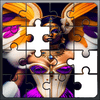
This game is hosted on the accessible GamePix platform and combines the classic sliding tile puzzle with the creepy, puppet-like look of Billy, the infamous doll from the Saw franchise. The premise is wonderfully simple: a snapshot image of Billy has been scrambled into a grid of mixed-up tiles, with one empty square. Your goal is to slide the tiles, one at a time, back into their proper positions, to reassemble the complete, coherent image. But to dismiss this as a child's toy is to vastly underestimate the fiendish complexity and deep strategic thought a sliding puzzle can demand. It's a game of calculated planning, pattern recognition and psychological endurance. This article will be your ultimate solvers guide, a thorough exploration of the mechanics, the step by step strategies, the advanced methods, and the mental composure needed to take you from a frustrated tile shuffler to a confident, methodical master of the scramble.
The Philosophy of the Sliding Puzzle: Chaos to Order
Understand the philosophical core of the sliding puzzle experience before you slide your first tile. The game gives you a state of contrived, intentional chaos. A familiar, unified face has been violently torn apart into a grid of disparate fragments. Your job is to undo entropy To painstakingly and systematically reestablish order in an unordered world. This is the basic, satisfying story of all puzzle games, and here it’s stripped down to its most mechanical form. There are no timers, no penalties to your score for the number of moves and no traps hidden away. The only enemy is the chaotic order itself, a quiet, still lock which only the key of logic in sequence can open.
This philosophy leads to a certain meditative frame of mind. Sliding puzzle is not a game to be attacked with frantic, hopeful energy. You can try randomly shuffling tiles to stumble onto the solution, but that's a road to perpetual frustration. The game is a silent and demanding teacher in the art of methodical progression. It shows you that a big problem that seems impossible can always be broken down into little sub-problems that you can manage one after another. It's not one thing you do, solving the puzzle. It's a process, a journey of a thousand small, deliberate slides, each one putting you one step closer to the final, coherent picture. The face of Billy the Puppet, with its unsettling, spiraled cheeks and piercing eyes, makes a perfect subject for this exercise. This picture is detailed and distinctive, making this puzzle both a visual delight and a real test of your skill in identifying and placing fragmented visual information. More than a scary face, the puppet that rides the tricycle is your silent, patient opponent in a battle of wits.
The Anatomy of the Grid: Breaking Down the Sliding Tile Mechanic
The puzzle is mastered only when you fully grasp the mechanical universe within which it works. The playing field is a square grid, usually a 3x3, with eight tiles and one empty space, or a more difficult 4x4 with fifteen tiles. The main mechanic is deceptively simple: only the tile horizontally or vertically adjacent to the one empty square can be moved. When you move a tile, it slides into the empty square and the square it occupied becomes the new empty square. This is the only legal move in the entire game. From this simple rule, an almost infinite well of complexity springs.
This rule imposes a fundamental restriction that informs all strategy . The blank space is your cursor . You can not directly manipulate the tile you want to move . You can manipulate the empty space . To move a specific tile , you need to position the empty square next to it in a strategic way first . So the game is not really about moving tiles. It is about managing the position of the empty square. The master solver doesn't think, "I want to move this tile there" but, "I need to bring the empty square around this tile so I can nudge it in the desired direction." This is a critical paradigm shift. The blank square is not empty. It is your most powerful and versatile tool.
Another mechanical idea is the Invariant State, a little piece of mathematical arcana that is curiously relevant. There are two mathematically distinct classes of permutations of the tiles in any sliding puzzle : the solvable configurations and the unsolvable configurations . If a puzzle is physically assembled correctly it will always be solvable. But randomly popping out some tiles and putting them back in can make the puzzle unsolvable . In a digital game like Billy the Puppet Snapshot Scramble Puzzle, the game engine guaranties that the starting configuration is always solvable. It’s a reassuring mathematical guaranty: no matter how impossibly scrambled it looks, there is always a way through. It may take a long time but it is there."
The Foundational Strategy: Solve Piece by Piece, Row by Row
The layered, row-by-row approach is the single most important strategic insight for solving any sliding puzzle, and the one that will take you from random shuffling to purposeful progress. It would be foolish to imagine the whole puzzle as one big chaos to be solved in one go. Instead, it must be broken down in manageable layers, from top to bottom. For a 3x3 puzzle, your sub-goals, in order, are: solve the top row, solve the second row, and the bottom row will solve itself. For a 4x4 it's: solve the top row, solve the second row, solve the third row, and then solve the last row. With this systematic approach, we can break down an intractable problem into a series of tractable sub-goals.
The universal first step . Let's walk through the method for solving the top row . You need to get tiles one, two and three (or four, on a bigger grid) into their right, final positions along the top edge, from left to right. To place a specific tile, there's a two-move repeating cycle (position, insert). First you have to move the target tile to anywhere on the grid with the empty space until it is somewhat near where it should be. This is the 'stance' phase. You're not trying to drop it in right now, you're just getting it into the right general neighborhood.
When the tile gets close to the target position you start the “insertion” phase. This requires a careful sequence of moves to align the empty space with the tile you want to move. The classic way to do it is to bring the target tile directly under the spot where it is supposed to be. Then you drive the empty space to the destination point itself. Now that the target position is empty and the target tile is right below it, a simple upward slide of the tile will put it right into its final spot. This elegant localized technique is the basic building block of the row-by-row method. So for each tile in the row you repeat it left to right. Once you place a tile, you essentially consider the solved section of the grid to be a “no-go zone” and build the rest of the solution without messing up your completed work.
Art of the Sequence: Advanced Maneuvering & The Problem of the Last Tile
The 'slide up, position below' trick is basic, but the sliding puzzle is a mean teacher and it will frequently present you with situations where this simple method is blocked. This is where you have to learn specific, memorized micro-algorithms, short sequences of moves designed to achieve a specific, awkward tile rotation. The commonest of these is the problem of the last two tiles in a line. Say that you have placed the first two tiles of the top row in the correct position. You slide the third and final tile into the space under where it belongs, but there’s no empty space anywhere. There is one tile missing from this row. It appears to be locked.
The method is to make a sequence that temporarily moves a tile which is already solved aside to make room to work, inserts the last tile, and then moves the displaced tile back. Here is a typical approach to solving a 3x3 grid. If the top row has tiles one and two solved and tile three stuck, you want to get tile three to the middle of the grid. Then slide tile two down into the center. Slide tile three into the now-empty second spot, then move the empty space to slide the displaced tile two back up into its correct first position. This temporary displacement technique is the heart of advanced solving. You have to be able to visualize how the whole sequence will eventually look like, and trust that the mess you make while unsolving a piece will eventually come out looking like a nice neat row.
For the bottom two rows, the last layer, the strategy changes. You can't just go row by row anymore, because you don't have the buffer of empty space below. Instead, you have to solve the last rows one column at a time, from left to right. You take the two tiles that go in the first column of the last rows and you stack them and fit them together. This columnar approach is the most cognitively demanding part of the endgame because it requires you to keep two tiles in mind at the same time. This is when you want to be at your mental model of the grid’s best.
Visual Puzzle: Get a Clue from the Picture
Billy the Puppet Snapshot Scramble Puzzle is not an abstract numbered grid. It’s a photograph, and that’s your biggest strategic asset. Billy the Puppet is a brilliant design choice for the theme. The image is filled with distinct, easily recognizable visual landmarks that continuously provide hints to the correct orientation and position of a tile. Your first move, before sliding a single tile, should always be to take a good hard look at the scrambled image. Know the parts. Find the four corners of the image, these tiles have two flat edges without pattern and are placed in the corners of the grid. Find the edge pieces. They have one flat edge and go on the sides. This immediately cuts down the number of possible homes for a given tile.
Look for unique and obvious traits. Billy’s face is the perfect canvas for this. Typically his eyes are dark, piercing and red-rimmed and usually they rest on two adjacent tiles. Finding and connecting these two tiles is often an important early milestone. The swirling red pattern on his cheeks is a brilliant navigational aid. The swirling line can be traced across many tiles, giving a continuous visual thread to follow. The black bowtie, the stark white collar of his shirt, the handlebars of his red tricycle are all high-contrast, distinctive visual anchors. A novice solver does not look at the image and tries an abstract number-solving technique. Master solvers always return to the image, using the unsettling, iconic features of Billy as a map. The image is not only a finishing reward, it’s a built-in, dynamic hint system. When you’re stuck, stop looking at the mechanics and start looking at the picture. Ask yourself, "Where does this swirl of red belong? What tile has the edge of his bow tie?" The visual information will almost always point you in the right direction.
The Psychology of the Scramble: Patience, Frustration, and the Puzzle Mindset
The biggest challenge of the Billy the Puppet Snapshot Scramble Puzzle isn't intellectual, it's emotional. The sliding puzzle is a uniquely powerful engine for generating a particular kind of frustration: the feeling of being stuck in a loop, of sliding tiles back and forth without visible progress. This is the psychological attack of the puzzle. It’s what separates the solver from the quitter that can defend against it. First, the psychological weapon in your arsenal is to embrace the process. You have to internalize that the first eighty percent of the time you spend solving will feel chaotic and unproductive. You are moving tiles into approximate positions and the board will be as scrambled as when you started, if not more scrambled. This is fine. Here’s how it goes. Don't confuse the absence of instant visible order with a lack of progress. Trust the process.
The second weapon is the strategic use of the break. The ‘incubation effect’ is a well-documented cognitive phenomenon in problem solving. If you’re stuck and staring at the screen, your brain can be stuck in unproductive mental loops. The very best thing you can do right now is stop looking. Stand up, walk away, get a glass of water, do something completely unrelated for 2 minutes. With the pressure of conscious, fixated thought off your subconscious mind, it will continue to process the spatial relationships in the background. You will often go back to the game, look at the grid, and immediately see the sequence of moves that was totally invisible to you just moments before. This isn’t magic. This is cognitive science.” The reset button is not a failure, it’s a tactical tool. If you're in a hopeless loop, it often takes less time to restart the puzzle with a fresh, clear mind than to try and untangle a deeply entrenched knot of incorrect moves.
The Digital Puzzle Box: Billy the Puppet
“GamePix has the ideal frictionless environment for a game like Billy the Puppet Snapshot Scramble Puzzle. This is a game that is best enjoyed in quiet, contemplative bursts. It could be a five-minute mental warm-up, a soothing cognitive exercise on a break, or a long, deep-focus challenge to beat your personal best time. There is no barrier between player and puzzle with the instant-play, browser-based format. no download, no account creation, no loading screen. The desire to solve can be satisfied immediately.
It’s a spooky, contemplative puzzle sitting alongside action games and racers on the platform, a testament to the beautiful diversity of the casual gaming space and its eclectic curation. For horror fans, choosing Billy the Puppet as the central image is just another layer of thematic delight, making a classic puzzle a playful, spooky collectible. It’s a digital puzzle box, a little mystery in a box. The reward is the slow, satisfying restoration of order from chaos, the last, silent slide that snaps the image of the grinning puppet into perfect, unsettling clarity. So take a deep breath and look at the jumbled pieces and find the corner of his red bow tie and begin the methodical, meditative work of putting Billy back together again. The puzzle awaits. The answer is just one slide away.
Embed this game