

















 Loading...

If you take a step back from the sprawling digital arcade of online gaming, some experiences will surprise you not with a sprawling open world or a complex narrative, but with the simple, instant thrill of speed and the defiance of gravity. These are the games where it takes just one perfectly timed input to make the difference between a glorious high flying success and a bone crunching rag doll failure. They appeal to a primitive love of momentum, of the tightrope between control and chaos, of the visceral thrill of a two-wheeled machine leaping into the air. Bike Attack is a game that sits confidently in this adrenaline-fueled genre, distilling the essence of extreme sports into a playable, pulse-pounding format.
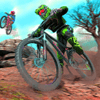
Bike Attack is a tribute to the world of off-road motorcycle stunting, and it’s immediately available on GamePix. It’s a straightforward, exhilarating concept on the surface: direct a rider and his bike through a series of increasingly treacherous, hill-filled courses, performing death-defying flips and collecting coins along the way. But if you think this is just a simple side-scrolling racer, you're seriously underestimating its depth. It's not just a speed game, it's a finely tuned physics simulator that requires you to master balance, momentum, rotational control and spatial awareness. The time difference between a perfect, point-maximizing run and a catastrophic, neck-snapping crash can be measured in milliseconds and degrees of tilt. This is your one-stop riding manual, a detailed look at the physics, psychology and advanced methods needed to turn you from a reluctant throttle-twitcher into a true master of the bike attack.
The Philosophy of Flow – Beyond Speed
Before you start the engine, it’s important to understand the core philosophy that separates Bike Attack from a mindless arcade racer. This game is not based on the simple premise of holding down the accelerator and hoping for the best. It’s based on the far more rewarding notion of managing flow state. Flow, in this context, is a constant, rhythmic string of flawlessly performed movements where the rider, the bike, and the terrain feel like one, unified thing. The physics engine is not a loose suggestion, but a consistent, unforgiving and deeply rewarding set of rules governing every grain of virtual dirt and every degree of rotation.
You don’t drive the bike. You partner with it. The rider has weight, the bike has mass and suspension and the terrain is a constantly changing variable of angles and coefficients of friction. A hill is not a blockage, it is a launching pad. A landing slope is not a safe zone, it is a critical angle that you have to match your trajectory to. A crash is not a random punishment, but a precise diagnostic report of a specific error in your speed, angle or rotation. pared-down visual style and clean lines are designed to cut out distraction, so you’re left alone with this pure, physics-based relationship. The philosophy is simple: Smoothness is speed, control is king, and style is the ultimate prize. The game isn’t about finishing a level but performing it, dancing with gravity on two wheels.
The Physics of Flight: The Forces You Don’t See
Reflexes alone will not suffice to excel at Bike Attack. You need to have a gut feeling for the physics engine that drives every move you make. This is the game’s unspoken language, and your main objective is to learn to speak it fluently. The first and most important one is Center of Mass and Rotational Inertia. Your rider and bicycle are a single composite object with a center of gravity. All of your rotation, your front flips and backflips, happen in the air around this center. By tilting the rider forward or backward with the tilt controls, you are shifting this center of mass relative to the bike, generating the torque that initiates and controls your rotation. A noob thinks, “I push the flip button.” A master thinks, “I am moving my center of mass just enough to start a rotation that perfectly matches my airtime.”
The second important principle is Vector Alignment, this is the relationship between the angle you land at and the slope of the land. To land properly is not simply to touch the ground, it is to touch it with your wheels perfectly parallel to the surface. If you land on a downslope on the front wheel and the back wheel is still up in the air, you’ll be thrown forward into a crash. If you land with your back wheel first on an upward slope, you slam your front wheel down and you bounce or flip. On each and every jump your task is to match the angle of the receiving terrain to the vector of the bike, the direction of your momentum. This means you have to be visually scanning not only the take-off ramp but the landing zone, analyzing the slope of it and adjusting the rotation in the air to fit it perfectly.
The third is Momentum Conservation. The speed you have going into a jump is the speed you'll have when you're in the air. A common fatal mistake is to try and cross a big long distance gap with too little speed. You are not saving yourself, you are guaranteeing a brief and painful fall into the chasm. This is a serious game. You have to learn to judge just how much run up speed is necessary for a given distance and then give it all you've got. This is the constant negotiation of the game, throttle for distance, tilt for rotation, all in seamless harmony.
The Control Toolkit: Throttle, Tilt, and the Fine Art of Balance
Your interaction with the Bike Attack world is deceptively simple. You have only a few key inputs. But the controls have a lot of expressive range. The first tool is Throttle, usually triggered by an on-screen button or a keypress. The throttle is not a switch that you flip on and off. A master rider uses the throttle as a fine tool. Long jumps gain momentum with a sustained press. For rolling terrain, a quick, rhythmic tap will keep you going at a steady, moderate pace. A full release is an air brake, a subtle way to shift your center of mass forward without a big tilt. Use the throttle as your primary tool to control lateral distance.
The second and most expressive tool is the Tilt Control, usually mapped to left and right arrow keys or the directional buttons on the screen. This is the home of your aerial art. The backflip rotation begins when you lean back and the front wheel lifts off the ground. Lean forward and the nose will go down and start a front flip. The beauty of the control system: it is analog in terms of time. Tap the back button briefly and you adjust your angle a few degrees, hold it and you rotate a full rapid rotation. The master rider does not jam the tilt controls, they stroke. They understand a backflip is not one move but a fluid arc of adjustments—lean back hard to kick off the rotation, neutralize to coast through the apex, then feather forward at the very end to arrest the rotation perfectly and land flush on the slope.
The third tool is the Rider's Body as an active counterbalance, not just a passenger. This is often overlooked. Even small changes in the rider’s position can dramatically affect the attitude of the bike. On a steep decline , leaning back shifts the weight over the back wheel , preventing a catastrophic end over end flip . When you lean forward on a steep climb, you dig the front wheel into the dirt and stop yourself from looping out into a wheelie. The secret to maintaining flow through uneven terrain where a static riding posture would fail is this constant, micro-adjustment of body position. The bike and rider are a dynamic, co-dependent system and your job is to be the intelligent, balancing core of that system.
The Perfect Jump: Anatomy of the Run-Up and Landing
The jump is the basic sentence in the language of Bike Attack. Every level is a paragraph formed from a series of these sentences, and the entire art is in learning to write them perfectly. Let’s break down the perfect jump into its constituent phases. The first phase is called The Run-Up and Take-Off. The run-up to the ramp is where the jump is won and lost. You have to be at exactly the right speed. Too much and you blow the landing. If you go too fast you'll hit a flat surface or an obstacle. The suspension on your bike compresses as you hit the lip of the ramp. It is a turning point. Lean back a touch before the suspension unloads, and you get a clean, controlled launch that leaves you in the ideal spot for a backflip.
The second phase is the Air Turn. Now you’re in the air and this is the phase of pure execution. The speed of your rotation is set by your first tilt input, which you do at the moment you take off. Your eyes should be on the landing zone rushing toward you, not on your rider. You're constantly taking in the visual info of the angle of the landing slope and your bike's orientation. Champions are born in the mid-air adjustment. There’s never a perfect jump. There are always micro-corrections. A little tap forward here to slow a backflip, a little lean back there to finish a rotation that’s coming up short. This is a constant real-time feedback loop.
The final stage is The Landing and Recovery. This is the acid test. You want a 'two-wheel landing,' meaning both tires hit the slope at the same time, at the perfect parallel angle to the ground. A good landing makes a sharp, satisfying “thump”. Your suspension immediately compresses as soon as your wheels touch down. This is a time of fragility. The common error is to remain stuck in the celebration of a successful landing . You have to immediately feather the throttle to take the impact with forward momentum and scan for the next obstacle . A failed sequence is when you land perfect and then hit the next hill cause you didn't react. The jump is not a discrete event, but a smooth link in a continuous chain of momentum.
The Terrain Taxonomy Reading the Ground as a Map
In Bike Attack the track is not a passive surface but an active, communicating character in the game. Every bump, every curve, every gap is a line of dialog, and you must learn to read it fluently. Rolling Hill The most basic type of terrain. These are soft, rolling mounds of earth. Rhythm is important. Use the crest of each hill as a small launch for a low, fast, horizontal jump, keeping your speed. The danger is to get bucked by an unexpected crest, so constant small body adjustments are key.
Next is the Steep Incline or Cliff Face. They are steep, almost vertical, ascents. Here the strategy is more traction and balance than it is speed. You want to come into it with good momentum, but you have to be precise on the throttle going up the hill. Aggressively lean forward to keep the front wheel on the ground. If the front wheel comes up you will go backward. Lose your momentum and you’ll stall and fall.” It’s a true test of your throttle-and-lean coordination.
Then you have the man-made Ramps and Kickers. These are the designed launchpads, usually angled perfectly for a specific type of jump. They are an invitation. The kicker with a sharp angle requires a high vertical jump with a quick flip, maybe a double backflip. A long low ramp is begging for a distance jump, a long floaty single flip where you cover a huge gap. Read the angle of the ramp and let it determine the character of your jump.
The Technical Gaps are the most dangerous terrains. It's a jump over a pit, spikes, or a bottomless void with a small precise landing platform on the other side. Panic is your enemy, not this. There is no space for a tentative approach. You have to know what speed you need, commit fully and do a perfectly controlled, no-spin or single-rotation jump where the landing is perfectly aligned. Finally, there is the steep, fast Downhill Chute. The danger here is uncontrolled acceleration and a front flip crash. Your technique is to feather the brakes or even lean back a little to keep the bike stable, treating the descent as a controlled fall rather than an all-out sprint.
The Stunt Business: On the Hunt for the Perfect Flip
Bike Attack rewards you not just for completing a level, but for completing it in style. The way the game quantifies flair is through the stunt system, which adds a compelling risk-reward element to every single jump. A safe, simple air with no rotation might get you across a gap safely, but it gets you no bonus. A perfect backflip, done in the exact time it takes to cross a gap, yields a huge score multiplier and, more importantly, a deep sense of personal satisfaction. The psychology of the stunt is a constant negotiation with the voice in your head that says, “Just be safe.”
The key to consistent stunting is to match your rotation speed to your airtime. A quick, low jump doesn’t give you time enough to do a back flip. Trying one will under-rotate you and crash you on your back. To get the most out of a big, high jump with five seconds of airtime, you can’t just do a single, lazy backflip; you have to put together a double flip, or mix a flip with a twist. Real artists of Bike Attack practice what is called “dead sailor” avoidance. A “dead sailor” is a real-world motocross term for a rider who freezes in the air, having already committed to a rotation but lost all mid-air control, helplessly waiting for the crash. The antidote is always to be micro-adjusting. Don’t just hold a line, keep feathering, keep reacting, keep flying the bike to the ground. A stunt is not a command, but a continuous performance.
The Psychology of the Crash: A Diagnosis, Not a Defeat
You will crash. In Bike Attack. You will crash hundreds, maybe thousands of times. You’ll get used to seeing your rider fly off into the dirt ragdoll style, flopping around like a rag doll. How you deal with these crashes is the single biggest factor in your long-term improvement, and it’s a mental game. To a frustrated player a crash is an unfair, random punishment. A failure, one that makes them angrily stab at the restart button. A master regards a crash as a diagnostic event, precise and data-rich. They play over the moment of the crash in their minds, asking a forensic question: What was the error exactly? Was my speed too low, causing me to under-jump the gap? Was my rotation too quick, causing me to over-rotate and land on my head? Was my landing angle misaligned with the slope?
Every crash is a lesson that is immediately, brutally and helpfully obvious. The game is not punishing you, it is teaching you. This reframing – “I failed” to “I received feedback” – is a powerful mental model that removes tilt and frustration. It makes the game a calm, iterative, almost scientific exercise. You make a hypothesis: “I think if I hit this ramp at medium speed and do 1 backflip, I’ll land perfectly.” You test the hypothesis. You crash. You analyze the data . " The rotation was too slow, I landed on my front wheel on the downslope . " You adjust the variable. " Next time, I'll lean back harder and earlier on takeoff . " This loop of hypothesis, test, analyze, and adjust is the heart of mastery . The crash isn’t the end of the loop, it’s the necessary, educational middle. Accept the ragdoll. It tells the truth.
Rhythmic Ride Audio, Visuals and the Zen of the Zone
The physics are the brains of Bike Attack, but the sensory experience is its soul. The game's audio-visual design is purpose built to help you get into, and deepen, your flow state. The visual style is generally clean and uncluttered with a clear contrasting color scheme that makes the rider, bike and terrain instantly legible. Your eye is not able to get lost in visual distractions. The profile of the ground against the sky gives an instant and clear indication of slopes and voids to come. This visual clarity is not a failing of art, it is an artistic necessity for the split second decision making the game requires.
Your silent copilot is audio. A metronome is the engine’s consistent high-revving whine. Its pitch changes give you instant feedback on your speed and traction without having to take your eyes off the UI element. A perfect landing sounds crisp and percussive. It's a satisfying reward marker, a sonic confirmation of a job well done. The hollow, awkward thud of a crash and the silence that follows is a clear, unambiguous signal to pause and reset. The best players seem to synchronize their input with an internal, rhythmic beat. Accelerate, launch, spin, land, accelerate again. It turns into a cyclical musical phrase. When you’re really in the zone you stop consciously working out angles and speeds and just feel the rhythm of the track. This is the Zen of Bike Attack, the pure, meditative focus that is at once thrillingly intense and deeply calming. Put on your headphones and turn off the world outside. Let the rhythm of the bike guide you.
Bike Attack the Platform of Instant Adrenaline
Bike Attack and the GamePix platform are a perfect match of content and context. As a hub of instant, browser-based gaming, GamePix is the perfect delivery system for a game built on short, intense and infinitely repeatable sessions. The key is frictionless access. Sometimes you just want to hop on a fake dirtbike and ride over impossible hills. With the platform you need nothing standing in your way. No downloads, no logins, no loading screens, one click and you are at the starting line.
This mode of accessibility is perfect for the game’s “one more try” loop. A run in Bike Attack might be only thirty seconds or three minutes, but the urge to immediately start again after a crash or a poorly styled run is too strong to pass up. GamePix really captures this ‘just one more’ rhythm, making it perfect for a quick break, a mental reset, or a long session chasing a perfect, high-scoring run. Bike Attack, with its physics-based, skill-based gameplay, is right at home on the platform, alongside other titles that value practice, precision and the acquisition of authentic, profound mastery. It’s a reminder that some of the most engaging games don’t require a hundred-hour commitment, just the bravery to hit the throttle and the finesse to stick the landing. So get in the saddle, steady your nerves and go at those hills. One more shot and you'll have the perfect ride.
Embed this game