


















 Loading...

The online gaming universe is a big one, with many complicated stories and complex control schemes that require hours of dedicated attention. But there is a genre that thrives on the opposite principle. It is the immediate, visceral, and pulse-quickening thrill of pure, unadulterated speed. These are the games that tap into a basic human urge, the urge to point a vehicle down a steep incline, release the brakes and let gravity be your engine. They are not games of construction or planning but of reaction, of balance and surviving the beautiful, chaotic descent. Bike Descent is a perfect example of this heart pounding category of game that takes the downhill experience and makes it as elegant and challenging as possible.
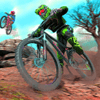
Bike Descent, available on the instantly accessible GamePix platform, is a masterclass in turning a deceptively simple premise into an endlessly replayable and deeply skillful experience. You are a rider on a bike, sitting astride a series of progressively more steep and rugged and less forgiving hills. Your objective is brutally simple: get to the bottom, in one piece. No opponents to race, no complex upgrade trees, no story to take your attention away. Just you, your bike, the mountain and the relentless, ever-increasing pull of gravity. But to write off this game as just a downhill roller is to miss the deep physics simulation and the difficult art of balancing that lie at its heart. This article will be your ultimate guide to downhill, an in-depth look at the techniques, psychology and physics that will transform you from a terrified, brake-gripping novice into a serene, gravity-defying master of the descent.
Philosophy of the Downhill: Control vs. Surrender
Before your wheels start turning, it’s important to understand the philosophical heart of Bike Descent. “Racing games are about aggressive forward propulsion, while this game is about the delicate dance between surrender and control. Gravity is not your enemy, it is your relentless, inexorable and omnipresent friend. You can't combat it. Trying to brake all the time and fight against the acceleration will result in a jerky, unstable and ultimately failed ride. The game’s central insight is that you must surrender to the pull of the descent, embrace the speed as a fundamental condition of being, and find your mastery within that condition.
It makes for a strange psychological situation. The game is a lesson in active relaxation. Tensing up, white knuckling the controls in anxiety is an express train to over-correction and catastrophic crashes. A tense rider is a reactive rider, always half a second behind the terrain. But a relaxed rider is a proactive rider. Their bodies are relaxed, their minds are at ease and their inputs are fluid, seamless and sparse. They are not fighting the mountain, they are moving with it. The Bike Descent philosophy is a zen koan on two wheels: to maintain control you must first relinquish the illusion of total control. You are not master of the mountain. You are a stone skip-ping down its face. Your only job is to stay upright and oriented as you fall with style.
Physics of the Fall: Gravity, Inertia and Traction
To ride with intuitive grace, you need to develop a gut-level feel for the physical forces involved. At its heart, Bike Descent is a beautifully distilled physics simulator and these invisible forces are the true language of the game. Gravity is the main force of course. It is the constant, never-ending acceleration downwards. It sticks you to the ground on a flat surface. If the surface is a slope, it breaks into two components. One component pulls you into the surface of the hill, providing traction. The other component pulls you along the surface of the hill, accelerating you. The greater the slope, the greater is the parallel, accelerating force, and the smaller is the perpendicular, traction-giving force. Which is why you feel light and skittish on the steepest descents, because gravity is pulling you more forward than down.
The second force is Inertia & Momentum. A heavy object in motion wants to keep moving. Once you get your bike rolling at a good clip it's a heavy gyroscopically stable machine that doesn't like to change direction very quickly. This is a two-edged sword. Stability, in contrast, is momentum. A bike going a good clip is naturally more self-correcting and resistant to little bumps than a tentative, pokey one. In contrast, momentum is your biggest enemy. That means you can't do tight turns at high speed, only loose flowing ones. This means you have to look far ahead, because your current path is a commitment that can not be broken immediately.
The third, and subtlest, force is the Traction-Gravity Trade-off. Traction is what allows you to turn, to brake and to accelerate without sliding. But as we said, on very steep slopes your traction is reduced because less of gravity's force is pushing you into the hill. That's the central technical problem of the game. You can brake and turn sharply on a gentle slope where you have good traction. On a near vertical cliff face you have little or no traction, you are in a near freefall and your inputs to steer and brake will have little effect. The master rider is constantly reading the angle of the slope and unconsciously adjusting their grip expectations. They know when the brake will slow them down and when it will lock the wheel and send them into an uncontrollable skid.
Anatomy of a Bike: Your Four-Wheeled Friend
In Bike Descent your vehicle is not a sprite, it is a physical system with specific, functional parts, that you have to know intimately. Your only contact with the ever changing, volatile ground are the two wheels. The relationship between these two little patches of rubber and the dirt is all the control. The bike has a modeled, visual or implied, suspension system that takes up the shocks. If you fall down from a height or roll over a big rock the suspension compresses and then bounces back. This bounce is seen as an unruly buck by the novice rider and he is bucked off. It is expected of a master, who takes the compression with a relaxed body and uses the energy of the rebound to spring smoothly into the next feature.
The most important part of this machine is the rider’s body. The rider is not a passive passenger, but a moving counterweight. You can dramatically change the bike’s behavior by shifting the rider’s weight forwards or backward relative to the bike’s center. Pressing back on the handlebars forces the rear wheel to the ground and increases rear traction for braking, avoiding the dreaded "end-over" crash on a steep descent. Leaning forward puts more weight on the front wheel and increases front traction for steering into a tight corner. This weight-shift is the basic grammar of your talking with the bike. The rider who is passive in the saddle is only playing half the game. You have to be a living breathing part of the machine, shifting your mass all the time, dancing with the terrain.
The Control Surface: Turning Intention into Motion
Bike Descent has a simple, elegant set of controls for interacting with its physics that allow for a surprising depth of expression. The main controls are usually the tilt or arrow keys to balance and steer, and often a brake or pedal key. The first and most important skill is to understand the Tilt and the Lean. This is your main survival mechanism. The more you pull on the control, the more you tilt the rider and bike backward, moving your center of gravity over the rear wheel. This is your go-to defensive stance on any steep straight descent. It stops the front wheel from digging in and throwing you over the handlebars. Leaning forward pushes the rider forward, weighting the front wheel. This is your go-to tool for cornering, ensuring the front tire bites into the dirt and turns the bike instead of washing out.
The second tool is the Brake. Knowing how to use it is what makes the artist different from the amateur. The amateur’s use of the brakes is a binary, panicked affair. On or off, usually slammed on in a moment of fear. The master’s use of the brake is an analogic poem. They use the brake in brief, rhythmic pulses, feathering it to take just a little bit of speed off before a corner without locking the wheels. They know the golden rule of downhill braking: brake before the corner, not in it. The majority of skid accidents occur when braking while turning, as the tire’s grip is overtaxed by the traction needed for both braking and steering. The master sets the speed to enter the turn, releases the brake and lets the bike carve a clean, uninterrupted arc through the corner.
The third concept is Active Steering in the air. Bike Descent has tons of natural jumps, drops and bumps to send you flying. The novice sees airtime as a terrifying, helpless interlude. A master identifies a crucial control point. The bike can tilt dramatically in the air, changing its attitude. If your nose has gone up too high, a forward tilt will bring it down. If you’re really crashing, a last-minute lean back can save you. This aerial tweak is the most expressive and advanced skill in the game. We allow you to set your bike’s angle to the landing slope in advance, making a potentially fatal leap a smooth, flowing transition.
Reading the Language of the Mountain The Terrain Lexicon
In Bike Descent, the downhill track is a text written in dirt, rock and gravity and you have to learn to read it fluently and at high speed. The greater part of the terrain consists of the Flow Section, a series of gentle, rolling undulations. The key to this is rhythm and less input. Use the natural terrain of the land. Take it easy on the hills going up and the bike will pump you down the back side, picking up speed without pedaling. Here is where the “surrender” part of the philosophy comes in. More control on a flow section makes you slower, less steady.
And then there are the Technical Rock Gardens. This is a patch of uneven rocks and bumps fitted close together. And panic is the killer. A tense rider will brake hard, stiffen up and get bounced into a crash. The proper approach is the “light hands, heavy feet” method. Don’t hold the controls too tightly. Keep your grip loose and relaxed, and let the bike move beneath you. Ride at a steady moderate speed. Too slow, and every rock will halt you. Too fast and you’ll go off. The only way through is a relaxed, centered posture that allows the suspension to do its job.
The scariest feature is the Cliff Drop or Vertical Chute. It’s a near-vertical drop and you feel as if you’re going off the edge of the world. Your natural reaction is to lean forward and brake, which is the worst thing you can do. Lean forward on a verticle drop and your over the handlebars right away. If you brake the wheels will lock and you will slide out of control. The right, counter-intuitive technique is to lean back, put all your weight behind the saddle and, if you use the rear brake at all, feather it gently. You have to give in to the drop, keep the bike straight, let gravity pull you through it, and trust that eventually the slope will change to something less vertical.
The final major feature is the Bermed Corner, which is banked. The game’s gift to you, a feature designed for speed. The berm is a sloped wall of dirt you can ride up high on. The trick is to go wide into the berm, lean the bike, your body, aggressively into the bank and let the dirt turn you. Watch the corner exit. A well-ridden berm is a pure, gliding, high-G moment of joy. You feel the physics working with you, not against you.
The Mental Descent: Facing Fear and the Adrenaline Spiral
In Bike Descent, the biggest obstacle is not a rock or a cliff, but the fear response in your own mind. The faster you go and the more treacherous the terrain, the more your brain’s amygdala fires, flooding your system with stress hormones. This results in what is known as the Adrenaline Spiral: fear causes physical tension, tension causes jerky, over-reactive inputs, those inputs cause a loss of control, the loss of control increases the fear, and the spiral ends in a crash. The main psychological task of the game is to break this vicious circle.
The antidote is what we might call wide-focus vision. When humans are afraid, their vision narrows to the immediate threat—the rock right in front of the wheel, the edge of the cliff. This target fixation is deadly, because you will steer into what you are looking at. The rider-master broadens and extends their vision. They are not looking at the obstruction, they are looking at the line through and beyond the obstruction. They are looking three, four, five seconds down the track, reading the terrain ahead with their peripheral vision while their central gaze is focused on the clear, open path of escape. The mantra is “Don’t look at the trees, look at the spaces between the trees.” This visual discipline alone can dramatically and immediately improve your performance.
Rhythmic breathing is the second mental technique. So when the tension mounts, we tend to hold our breath. This starves the brain and muscles of oxygen, causing fine motor control to deteriorate further. If you are in a treacherous section, consciously forcing yourself to take slow, deep, rhythmic breaths can stave off the panic. It tells your nervous system that you are in control, that you are not in a life-threatening emergency, but rather in a state of focused athletic flow. Your body will follow your breath and the bike will follow your body.
The Flow State: Man and Mountain Become One
The ultimate prize for mastering Bike Descent is not a high score or a finished level, but the attainment of the flow state. Psychologist Mihaly Csikszentmihalyi popularized the term flow, which is a state of mind where the person is fully immersed in what they are doing. When in flow, a person loses self-awareness, has a distorted sense of time, and feels like what they are doing just comes naturally and easily. Bike Descent is a near perfect flow state machine. With clear goals of the game, immediate feedback and finely balanced challenge-to-skill ratio, conditions are ideal for entering this zone.
In the flow state, you’re no longer thinking about individual inputs. You are not narrating your actions with an internal monolog of “lean back, now brake, now turn.” The bike has become an extension of your body, and the terrain is no longer a series of separate obstacles but a single, unified, flowing path. Your answers are immediate, pre-cognitive. You hit a bump and your body takes it before your conscious mind can even register it. Time stretches and a two minute descent can feel like forever and an instant. The game’s deeper addiction is the chase for this state. The high score is a souvenir, the flow state is the real destination.
The Speed Ecosystem: Bike Descent and the GamePix Platform
Bike Descent fits right in on the GamePix platform, a digital arcade built on the ideals of instant access and pure gameplay. The game’s structure – short, self-contained runs from top to bottom – is a perfect fit for the browser-based, pick up and play model. No save-point to worry about, no inventory to manage. Each run is a clean slate, a new opportunity to test your skills against the mountain. That frictionless access is important for a game that’s about rhythm and repetition. It’s the “one more try” loop, the instant restart after a crash, that builds muscle memory and makes a master rider.
GamePix is a curator for this type of hyper-focused, skill-based experience. The platform removes the obstacles of downloads, accounts and fees, leaving only the raw, unmediated interaction between player and physics. In a world where games are increasingly bloated and demanding, a title like Bike Descent on a platform like GamePix is a breath of fresh alpine air. It’s a reminder that the best virtual experiences are often the simplest: a bike, a mountain, and the age-old, thrilling challenge of the descent. So, grab the bars, take a deep breath and point your front wheel down the hill and release the brake. The mountain calls and the only way down is up.
Embed this game